Most of us, when confronted with a difficult neighbour, resort to a strongly worded letter or a passive-aggressive note about recycling bins. Our medieval ancestors, however, had a rather more dramatic solution. Killing the Dead, a new book by historian John Blair, explores the deeply serious business of killing the dangerous dead — and it turns out that for centuries, this was considered an entirely reasonable item on the parish to-do list, right up there with mending the church roof and arguing about whose pig that is.
So What Exactly Are the Dangerous Dead?
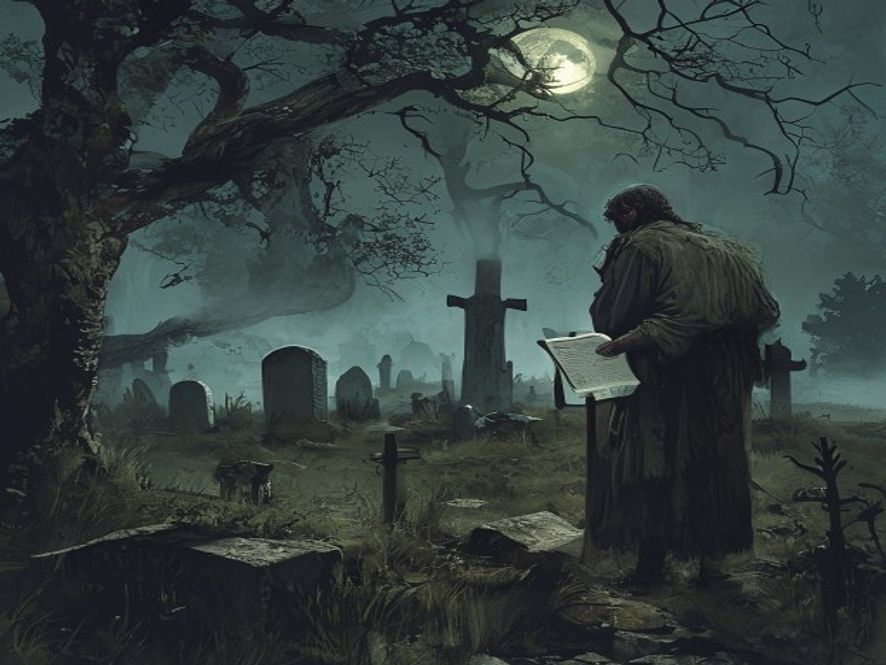
Blair’s book opens with what he calls ‘approaches’, which sounds reassuringly academic until you realise he means ‘how do you know if your recently deceased uncle is about to make everyone’s life a misery from beyond the grave.’ The dangerous dead, in the folklore tradition Blair examines, are those unfortunate souls who died under suspicious, shameful, or otherwise irregular circumstances. Suicides, excommunicates, the unbaptised, and general troublemakers all qualified. Consequently, their corpses were treated with what we might diplomatically call ‘extra precautions.’
These precautions ranged from burying people at crossroads — a practice documented across British archaeological sites — to staking bodies, decapitating them, or placing large rocks on the chest. You know, just in case. It is, frankly, the most proactive approach to community relations imaginable.
Killing the Dangerous Dead: A Very British Obsession
What makes Blair’s survey particularly compelling is his argument that the dangerous dead didn’t just happen — we made them. Society, he suggests, created the conditions in which certain individuals became posthumous threats through stigma, exclusion, and the peculiar anxiety of communities that needed someone to blame for crop failures, livestock deaths, and general medieval misfortune. Furthermore, the rituals used to neutralise these threats tell us as much about the living as the dead.
The revenant tradition in British folklore is older and stranger than most people realise, predating the Victorian vampire craze by several centuries. Meanwhile, the apotropaic methods Blair catalogues — charms, rituals, and physical interventions designed to ward off or destroy the undead — reveal a sophisticated, if horrifying, folk theology that operated largely outside the official church.
Deviant Burials and the Archaeology of Fear
Perhaps the most fascinating section concerns deviant burials — those graves that archaeologists find with skeletons in odd positions, missing heads, or pinned down with iron spikes. These aren’t accidents or careless gravediggers. They are, Blair argues, deliberate and purposeful acts of what we might call community self-defence. English Heritage and various archaeological bodies have uncovered dozens of such sites across Britain, each one a small, silent testament to someone’s very bad reputation.
However, Blair is careful not to mock his subjects. These were real anxieties in real communities, and the folklore surrounding the dangerous dead served genuine psychological and social functions. It gave people a framework for processing grief, explaining misfortune, and managing the terrifying uncertainty of what, if anything, comes after death.
Should You Read This? (Spoiler: Yes, Obviously)
Blair’s book, reviewed in the magnificent Fortean Times — the gold standard of serious weird — is described as both comprehensive and enjoyable, which is a combination that doesn’t come along nearly often enough. It is, in short, a thoroughly researched, genuinely gripping tour through one of history’s most entertainingly morbid preoccupations.
If you’ve ever wondered why your ancestors seemed so very, very worried about what the dead were getting up to, or if you simply enjoy the thought that killing the dangerous dead was once a legitimate community responsibility, this is absolutely the book for you. Rest assured: your local council has yet to reinstate the position. Probably.
Read the original story at The Fortean Times.
🛒 Related Finds on Amazon
As an Amazon Associate I earn from qualifying purchases.