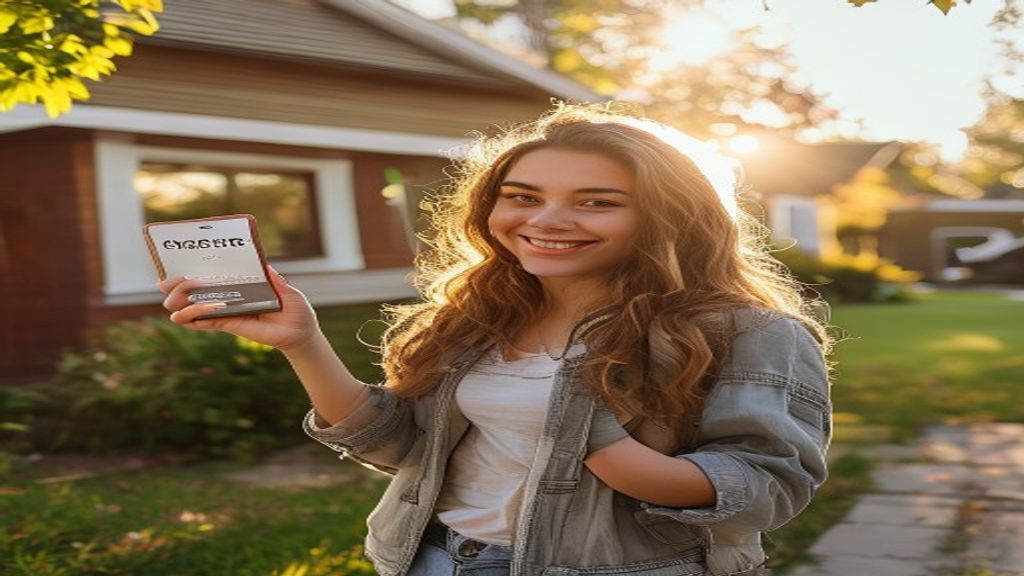
There is a special kind of joy that comes with buying your first home. The keys, the champagne, the solemn vow to finally learn what a stopcock is. And of course, the sold sign selfie — that proud, beaming photograph in front of your new castle that you immediately blast across Instagram for the admiration of your 300 followers and your mum. Lovely. Heartwarming. Also, according to one Australian private investigator, about as sensible as pinning your front door key to a public noticeboard.
The Investigator Who Rained on Everyone’s Parade
Cassie Crofts, who runs Venus Investigations in Australia, is the sort of person you very much want on your side and absolutely do not want investigating you. She specialises in pre-date background checks, tracking stalkers, and catching unfaithful partners — basically the full spectrum of human suspicion. In a video posted on Instagram in May, she delivered a message that has since sent mild panic rippling through the new homeowner community.
Her warning was simple, devastating, and slightly obvious in retrospect: stop posting your sold sign selfie. Even if you diligently blur, crop, or erase the address from the photo, you are not, she explains, as clever as you think you are. All a determined individual needs, apparently, is the name of your estate agent. From there, a quick scroll through recently sold properties on any listings website, a bit of photo-matching with your Instagram post, and voila — your new address is located faster than you can say fixed-rate mortgage.
The QR Code Catastrophe Nobody Saw Coming
However, if that was not alarming enough, consider the tale of one homeowner who thought she had been terribly thorough. She used an app to scrub all visible text from her sold sign photo — address gone, estate agent details gone, the lot. Smashing. Job done. She posted it and thought nothing more of it. Then, a year later, a friend casually informed her she had found the address and the purchase price within seconds. How? The QR code on the sign was still visible and still active. One scan, and the listing popped up like an eager Labrador.
The photo came down immediately. One imagines the homeowner sat quietly afterwards, reconsidering several life choices.
Why Sold Sign Selfie Danger Is More Serious Than It Sounds
Now, at this point you might be thinking: surely this is all rather paranoid? People are busy. Who has time to stalk someone via estate agent websites? The answer, unfortunately, is: more people than you would like. According to the UK government’s own statistics, some 2.9% of adults experience stalking, with police recording over 141,000 stalking offences by September 2025 — a 6.7% increase on the previous year. Meanwhile, across the pond, the FBI reports a break-in occurring every 26 seconds in the United States, even as overall burglary rates decline.
Furthermore, it is worth remembering that property listing websites keep records long after a sale completes. Consequently, those cheerful interior photos — the ones showing exactly how your living room is laid out, where your back door is, and that you have a very expensive television — remain searchable for anyone with ten minutes and a grudge.
What You Should Do Instead Besides Quietly Panic
Crofts’ advice is refreshingly practical: wait. Simply wait until you have settled in, changed the locks, and ideally made friends with a large, loud neighbour before sharing your domestic triumph online. The Action Fraud website also has broader guidance on keeping your personal information safe in the digital age, should you want to go down that particular rabbit hole.
It is also worth mentioning that Crofts, to her credit, declined a separate case in which a company asked her to conduct surveillance on its own remote workers. There are limits, apparently, even in the PI business.
The Lesson Is That the Internet Remembers Everything
The sold sign selfie danger is, at its core, a very modern parable about oversharing. We have become so accustomed to broadcasting life’s milestones — the engagement, the baby, the sourdough starter — that we sometimes forget the internet is not a private diary. It is more like shouting your personal details into a very large, very attentive crowd. Most people are lovely. Some are not. The QR code does not discriminate.
So by all means, celebrate buying your home. Pop the cork. Dance around the kitchen. Just perhaps save the photographic evidence for somewhere a little more private than Instagram, until you are quite sure the QR code is not still cheerfully advertising your new postcode to the entire world.
Read the original story at Bored Panda Weird.
🛒 Related Finds on Amazon
As an Amazon Associate I earn from qualifying purchases.