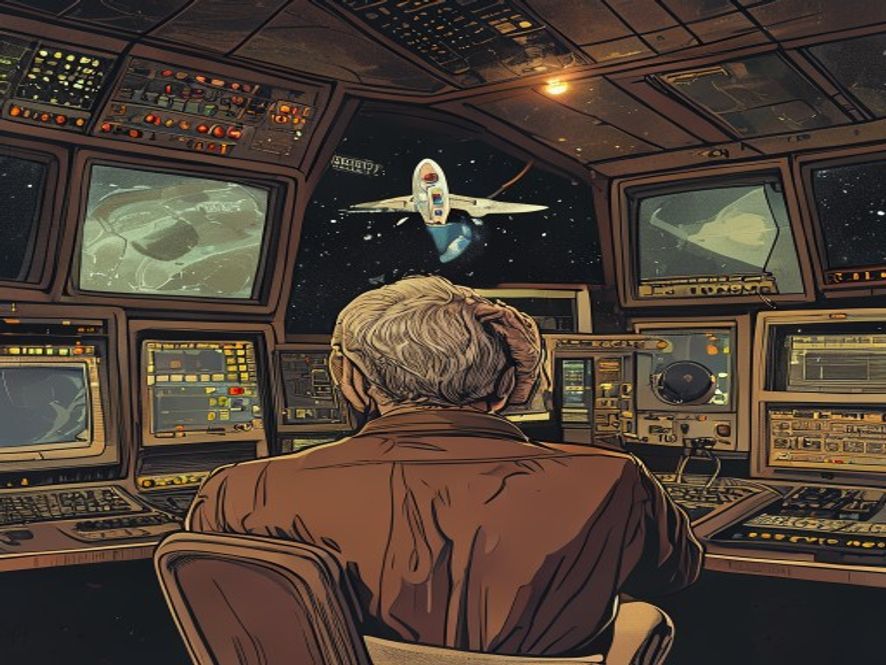
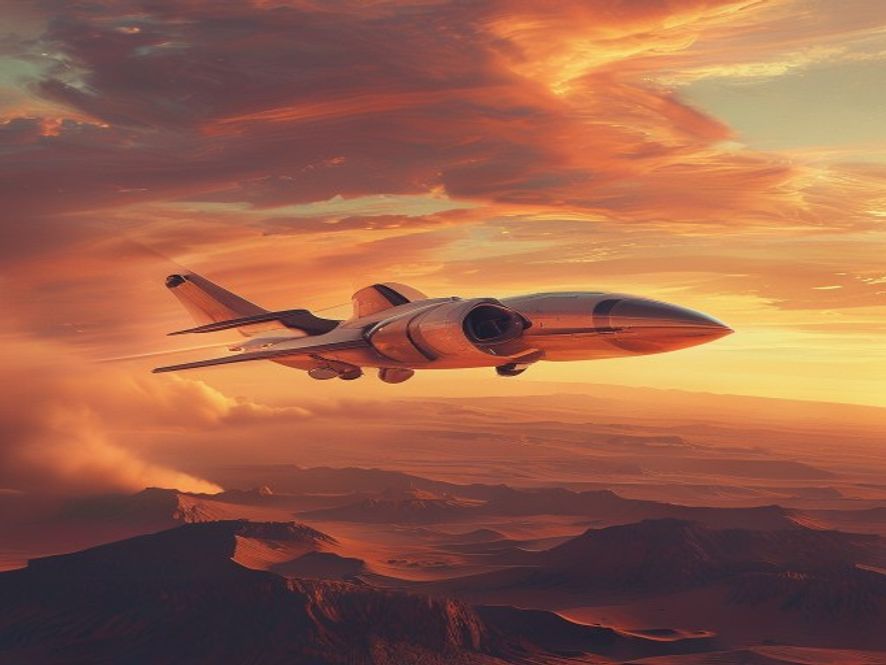
Here is a sentence you never expected to read on a Monday morning: the American government once spent an enormous pile of taxpayer money building aircraft with no wings. Not broken-off wings. Not folded wings. No wings whatsoever. These gloriously deranged wingless aircraft were called lifting bodies, and they were absolutely, stubbornly, magnificently real. Furthermore, one of them crashed so spectacularly that it was repurposed as the opening sequence of a hit 1970s television programme. You truly could not make it up, though as it turns out, you did not need to.
The Philosophy of Not Having Wings
To understand why anyone would build a wingless aircraft, you first need to appreciate the peculiar obsession aviation engineers have with stripping things down. Much like someone who removes all the furniture from their flat in pursuit of minimalist enlightenment, aerospace boffins in the mid-twentieth century became fixated on the idea of the pure flying shape. Conventional aircraft, they reasoned, were cluttered with bits. Wings, tails, fuselages, all that faff. What if the entire body of the aircraft generated lift? What if, in short, the plane itself was the wing? This is the concept behind the lifting body, and however mad it sounds at a dinner party, it is rooted in genuinely serious aerodynamics.
Meanwhile, on the opposite end of the spectrum, engineers had already been experimenting with flying wings, aircraft that are essentially just one enormous wing with no fuselage to speak of. The B-2 Spirit stealth bomber is perhaps the most famous modern example. The lifting body was, in a sense, the philosophical opposite: all fuselage, no wing. Both ideas stem from the same restless desire to ask whether we actually need all this stuff.
The Northrop M2-F2 and Its Date With Destiny
The Northrop M2-F2 was one of NASA’s most important lifting body experiments, a stubby rounded craft that looked rather like someone had sat on a conventional aircraft until the wings snapped off. It was designed to test whether a spacecraft returning from orbit could glide to a runway landing rather than splashing ignominiously into the ocean. On 10 May 1967, however, test pilot Bruce Peterson encountered a rather significant problem involving a chase helicopter, a momentary distraction, and the unforgiving surface of Rogers Dry Lake in California. The resulting crash, six rollovers and one very bad day, was caught on film. Consequently, when producers of The Six Million Dollar Man needed dramatic crash footage for their title sequence, they knew exactly where to look.
And so it came to pass that real experimental aviation history became the backdrop for Lee Majors playing a bionic astronaut secret agent. The voiceover solemnly intoned that they had the technology to rebuild him. What they did not mention was that the aircraft he crashed in already existed and had given a real pilot a very rough afternoon indeed.
Why Wingless Aircraft Actually Make Sense for Space
The genius of the lifting body concept, however daft it looks on the runway, is that it suits spacecraft returning from orbit rather well. A traditional capsule such as Mercury or Soyuz has essentially no aerodynamic control and comes down under a parachute hoping for the best. A lifting body, by contrast, can actually manoeuvre during re-entry, which is tremendously useful if you would like to land somewhere specific rather than wherever the wind fancies. Modern spaceplane concepts owe a considerable debt to these ungainly experimental blobs bouncing around the Mojave Desert in the 1960s and 70s.
The entire lifting body programme was, in its quietly bonkers way, a crucial stepping stone toward the Space Shuttle and beyond. Not bad for something that looks like a potato with ambitions. So next time someone tells you a mad idea will never work, remember the wingless aircraft, the flying thing that was not supposed to fly, crashed on national television, and still managed to change aviation history.
Read the original story at Today I Found Out – Weird Facts.
🛒 Related Finds on Amazon
As an Amazon Associate I earn from qualifying purchases.