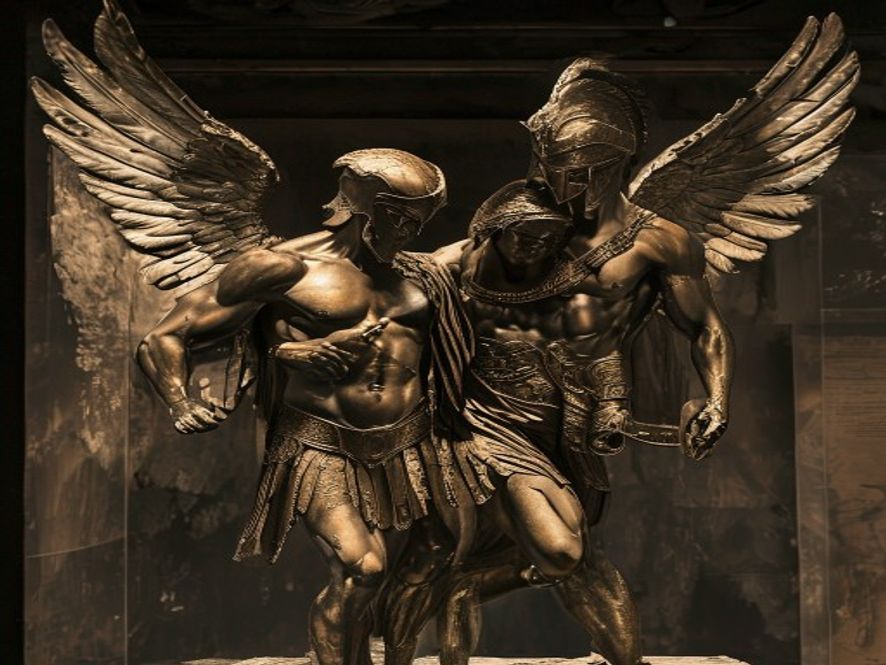
There are certain gaps in the academic literature that make you wonder what took so long. We have books on Roman aqueducts, the history of cheese, and at least seventeen volumes dedicated to the semiotics of garden gnomes. But dangerous dead folklore — the rich, deeply unsettling tradition of worrying that your recently deceased neighbour might pop back for a visit — has been somewhat underserved. Until now. John Blair’s Killing the Dead has arrived to plug that gap with scholarly rigour and, one suspects, considerable personal enthusiasm.
What Exactly Is Dangerous Dead Folklore, and Should You Be Worried?
Blair’s central thesis is both simple and magnificently alarming: across cultures and centuries, people have been absolutely terrified that the dead might not stay dead. Not in a metaphorical, ‘their memory lives on’ sort of way. In a very literal, ‘nail that coffin lid down properly’ sort of way. The revenant — the returned dead — haunts folklore from medieval England to Eastern Europe with remarkable consistency. Consequently, entire communities developed elaborate rituals specifically designed to keep the deceased firmly in the ground where they belonged.
Blair, a distinguished medieval historian at Oxford University, approaches this not as a credulous believer but as a rigorous scholar of social history. He asks the far more interesting question: why did so many cultures, independently, arrive at the same terrifying conclusion? Furthermore, what does deviant burial — bodies pinned with stakes, decapitated, buried face-down — tell us about the communities who felt it necessary?
Deviant Burials, Dodgy Corpses, and the Neighbours Everyone Dreaded
The archaeological record, it turns out, is absolutely littered with what experts politely call ‘deviant burials’. These are graves where something was clearly done to the body to prevent it from getting ideas above its station. Stones placed on the chest. Limbs removed. The occasional decapitation, with the head helpfully popped between the knees, presumably to make it harder to find in a hurry. The Archaeological Institute of America has documented such finds across dozens of cultures, and the sheer variety of preventative measures suggests a universal human anxiety about what happens after lights out.
Blair explores who, precisely, was considered a dangerous dead candidate. Suicides featured heavily, as did the excommunicated, the unbaptised, and — somewhat harshly — those who had simply been a bit difficult in life. Meanwhile, the methods for neutralising them ranged from the sensible (proper burial rites) to the spectacular (staking, burning, dismemberment). One begins to feel a certain sympathy for the medieval undertaker’s workload.
The Apotropaic Arts, or How to Tell a Corpse Who’s Boss
The word ‘apotropaic’ — meaning designed to ward off evil — gets a thorough workout in Blair’s text. However, Blair is careful not to let the terminology become a barrier. This is an accessible, often grimly entertaining read that situates these beliefs within their proper social context. The British Library holds numerous manuscripts documenting these practices, and Blair draws on an impressively wide range of primary sources to build his argument.
What emerges is a portrait of communities living with genuine, structurally embedded fear. These weren’t isolated eccentrics burying their relatives face-down. These were entire villages operating according to a coherent, if deeply unnerving, set of beliefs about death, community responsibility, and the permeability of the boundary between the living and the dead. The Folklore Society has long championed exactly this kind of serious engagement with popular belief, and Blair’s book sits comfortably in that tradition.
Why Dangerous Dead Folklore Still Matters Today
One might reasonably ask whether any of this is relevant in 2024, when our primary concern about the dead is whether the WiFi reaches the crematorium. Blair, however, makes a compelling case that these beliefs reveal something fundamental about human psychology and community formation. Our relationship with mortality, with transgression, and with the boundaries of the acceptable has not changed as much as we’d like to think. Furthermore, the enduring popularity of zombie fiction suggests we’ve simply outsourced our dangerous dead folklore to Netflix.
Killing the Dead is, in short, a genuinely excellent piece of scholarship wrapped around one of history’s most entertainingly morbid subjects. If dangerous dead folklore is your thing — and frankly, it should be everyone’s thing — this is essential reading. Just perhaps not immediately before bed.
Read the original story at The Fortean Times.
🛒 Related Finds on Amazon
As an Amazon Associate I earn from qualifying purchases.